
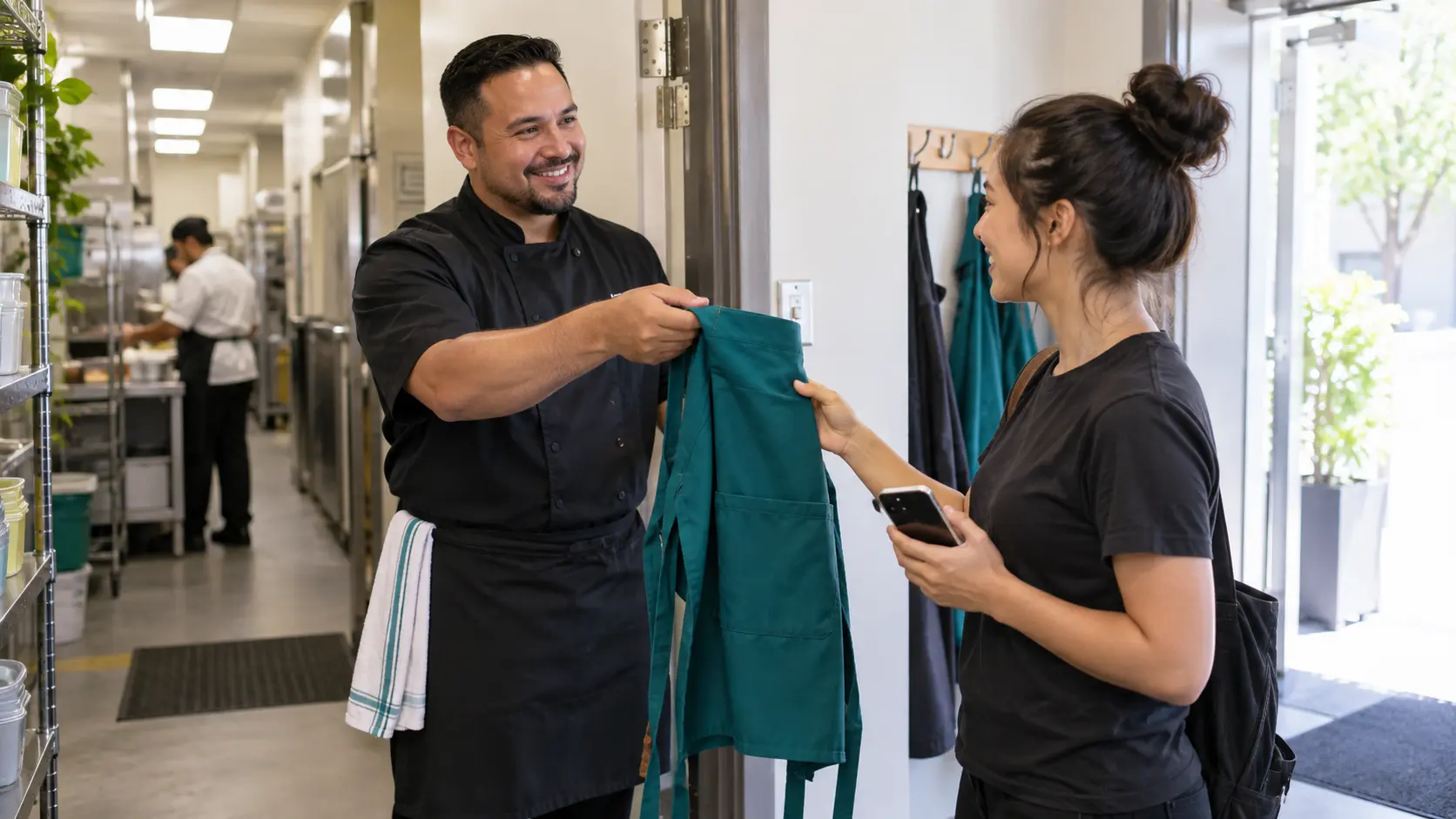
In many restaurants, a new starter’s first day looks like this: a uniform, a quick tour and “follow Sam for the shift.” Formal training, if it exists, happens weeks later — often after the new person has already picked up bad habits or decided the job is not for them.
The first few days are when people decide whether to stay. Phone-based training lets you start onboarding properly from day one.
Why the first week matters
New staff leave early when they feel lost, embarrassed or ignored. Hospitality already loses people faster than most industries — an OysterLink analysis of US labour data put the accommodation and food services quit rate at nearly double the private-sector average in early 2026. A strong first week is one of the cheapest ways to protect your hiring investment.
Before day one
Send a short welcome message with the start time, who to ask for, what to wear and where to park. Enrol them in their training course and let them know the login is on its way. Many new starters will begin the first lessons before they walk in the door, which means they arrive with context and questions.
Day one: people first, then the basics
Spend the first hour on people and place: introduce the team, show them the building and explain how a shift runs. Then give them fifteen quiet minutes to open their first course on their phone, so they see it is real and know how to find it.
Days two to five: learn it, then do it
Pair each lesson with practice on the floor. If today’s module covers greeting guests, let them greet guests with a colleague nearby. Learning next to the work is how lessons turn into habits — the Association for Talent Development found that on-the-job learning was a key part of development in two-thirds of the organisations it surveyed.
End of week one: check in
Sit down for ten minutes. Ask what has been hard, what has been easy and what they still do not understand. Check their course progress together. This conversation alone tells a new starter that someone cares whether they succeed.
Why the phone makes this possible
Without an online course, onboarding depends on how busy you are. With one, the knowledge part runs on its own: every new starter gets the same standards, at their own pace, whether they start on a Tuesday lunch or a Saturday night. You and your senior staff can focus on the practical coaching that only people can give.
Where to start
For most front-of-house hires, Restaurant Staff Excellence covers the five essentials — service, etiquette, safety, cleaning and stock — in one purchase. New waiters should add Waitering Excellence for the full sequence of service. See every option on our courses page.
Before your next hire starts, send them a welcome message and their course login. Day one will look very different.
References
OysterLink analysis of BLS JOLTS data (PR Newswire, May 2026). https://www.prnewswire.com/news-releases/hospitality-workers-quit-at-a-higher-rate-than-any-other-industry-in-the-us—oysterlink-analysis-302765460.html
Association for Talent Development: 2016 State of the Industry Report (press release). https://td.org/content/press-release/atd-releases-2016-state-of-the-industry-report