
fast, and they cost far more than the first-aid kit: lost shifts, insurance claims, legal risk and staff who do not come back.
Most accidents are predictable, which means most are preventable. Here are the seven hazards every hospitality manager needs to control.
1. Slips and trips
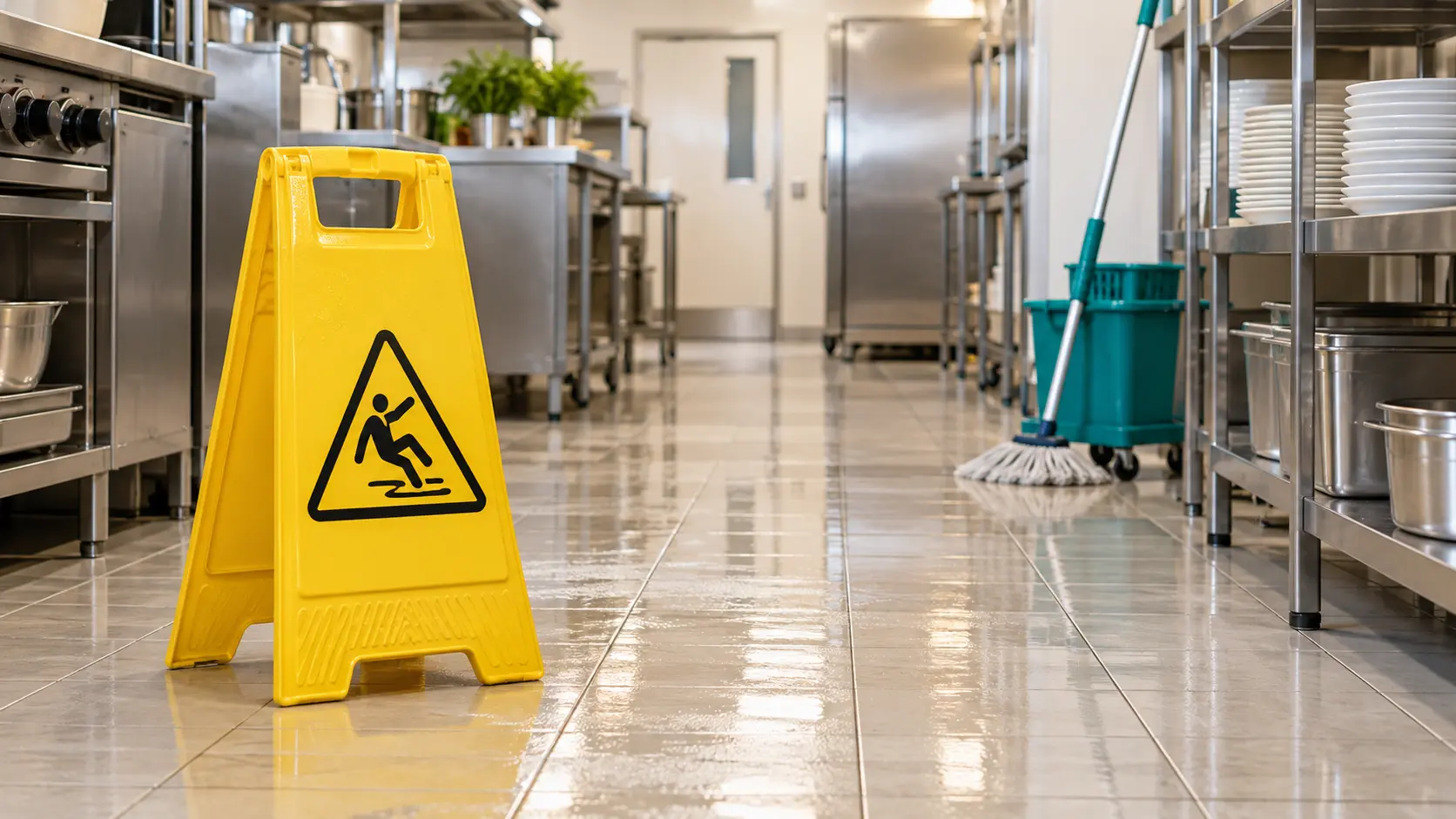
This is the big one. The UK Health and Safety Executive states that slips and trips remain the single most common cause of major injury in UK workplaces, with kitchen assistants, chefs and waiting staff most affected. Clean spills immediately, use suitable non-slip footwear, keep walkways clear and use warning signs when floors are wet.
2. Burns and scalds
Hot oil, steam, ovens and boiling liquids all burn. Train staff to use oven gloves, announce “hot behind” when carrying, and follow the manufacturer’s instructions when emptying and cleaning fryers.
3. Cuts
Knives, slicers, broken glass and opened tins cause a steady stream of injuries. Keep knives sharp (blunt knives slip), use guards on slicers, and have a clear procedure for broken glass that never involves bare hands.
4. Manual handling
Deliveries, kegs, stock boxes and heavy pots strain backs and shoulders. Teach safe lifting, use trolleys, store heavy items at waist height and do not ask one person to lift what two should carry.
5. Hazardous chemicals
Cleaning chemicals can burn skin, damage eyes and produce toxic fumes if mixed. Keep them labelled and stored away from food, provide gloves and eye protection, and make sure staff know which products must never be combined.
6. Fire
Kitchens combine heat, fat and electricity. Keep extraction systems clean, check extinguishers and fire blankets, keep exits clear and make sure every staff member knows the evacuation route — including new starters on their first day.
7. Aggression and violence
Late-night trading, alcohol and cash handling can put staff at risk from difficult guests. Train staff to de-escalate, never to confront, and to call for help early.
How to control them
Start with a simple risk assessment: walk the premises, list what could hurt someone, and decide what you will do about it. The HSE’s catering and hospitality guidance is a useful free resource wherever you trade, though you should always check your own country’s legal requirements.
Then train your people. A risk assessment in a drawer protects nobody; staff who understand the hazards do.
Our Occupational Health and Safety course covers the everyday hazards in hospitality workplaces in short phone-based lessons, and Cleaning SOPs adds safe chemical use. Both are part of Restaurant Staff Excellence.
Walk your kitchen with fresh eyes this week and find one hazard that has become invisible because everyone is used to it.
References
UK Health and Safety Executive: Slips and trips in catering. https://hse.gov.uk/catering/slips.htm
UK Health and Safety Executive: Catering and hospitality. https://www.hse.gov.uk/catering/