Cleaning is the part of restaurant work nobody boasts about, yet it underpins everything else. A clean kitchen protects guests from illness, protects staff from accidents and protects your reputation from a bad inspection or review.
The secret is not working harder. It is having a clear schedule so nothing depends on memory.
Why a written schedule matters
Food safety regulators consistently treat cleaning as a core part of running a food business. The UK Food Standards Agency, for example, publishes practical guidance for food businesses that covers cleaning alongside hygiene, allergens and hygiene ratings. Wherever you trade, check your local regulator’s requirements — but the principle is universal: cleaning must be planned, done and checked.
Daily: during and after every service
Clean and sanitise food-contact surfaces, chopping boards and utensils between tasks and at the end of service. Clean up spills immediately. Empty bins and clean the bin area. Wipe down equipment handles, fridge doors, light switches and the pass. Sweep and mop kitchen floors at close. In the dining room, clean tables, chairs, menus and condiment containers. Check and restock bathrooms at least once a shift.
Weekly: the deeper clean
Clean inside fridges and freezers, rotating and checking stock as you go. Descale coffee machines and dishwashers according to the manufacturer. Clean ovens, grills and fryers thoroughly. Wash walls and splashbacks around cooking areas. Clean behind and under movable equipment.
Monthly: the areas people forget
Clean extraction canopies and filters (or confirm your contractor has). Defrost freezers if needed. Clean storerooms, shelving and high surfaces. Check drains and grease traps. Review your pest control records.
Make it stick
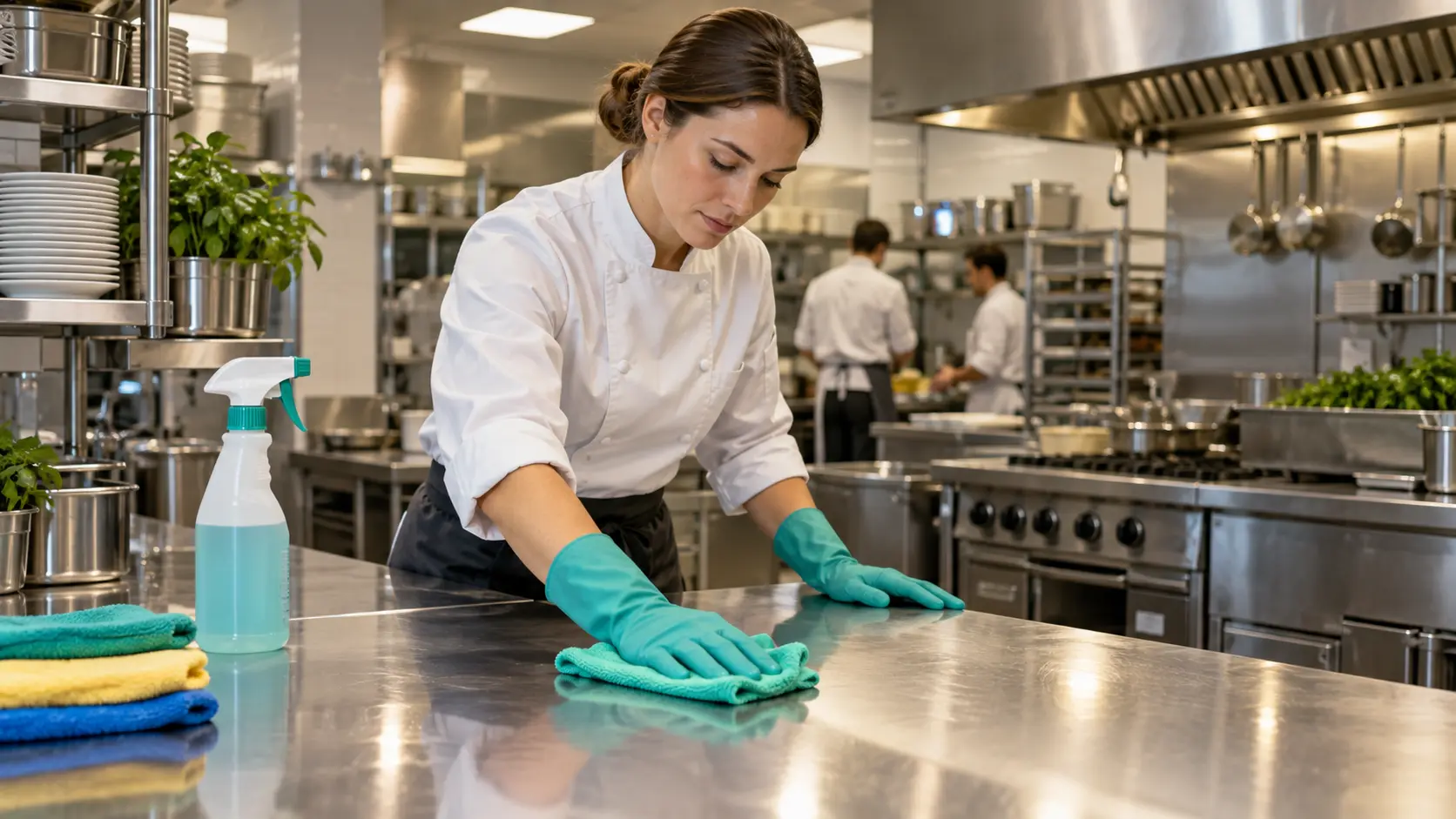
Write the schedule down, room by room, and pin it where the work happens. Give each task an owner and a time. Use a sign-off sheet so you can see what was done and by whom. Use colour-coded cloths and equipment to prevent raw food contamination spreading to ready-to-eat areas.
Most importantly, explain why. Staff who understand that a dirty chopping board can make a guest seriously ill clean differently from staff who just follow a list.
Train the standard, not just the task
Our Cleaning SOPs course sets out clear cleaning standards for kitchens, dining areas and bathrooms, and explains the reasoning behind each one. It pairs naturally with Occupational Health and Safety, because many cleaning tasks involve chemicals and wet floors. Both are included in Restaurant Staff Excellence.
Walk through your kitchen tonight and find one surface that is not on anyone’s list. Add it, give it an owner, and check it tomorrow.
References
UK Food Standards Agency: Running a food business, guidance and resources (GOV.UK). https://www.gov.uk/government/collections/running-a-food-business-guidance-and-resources-from-the-food-standards-agency