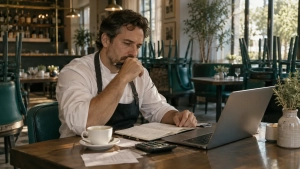
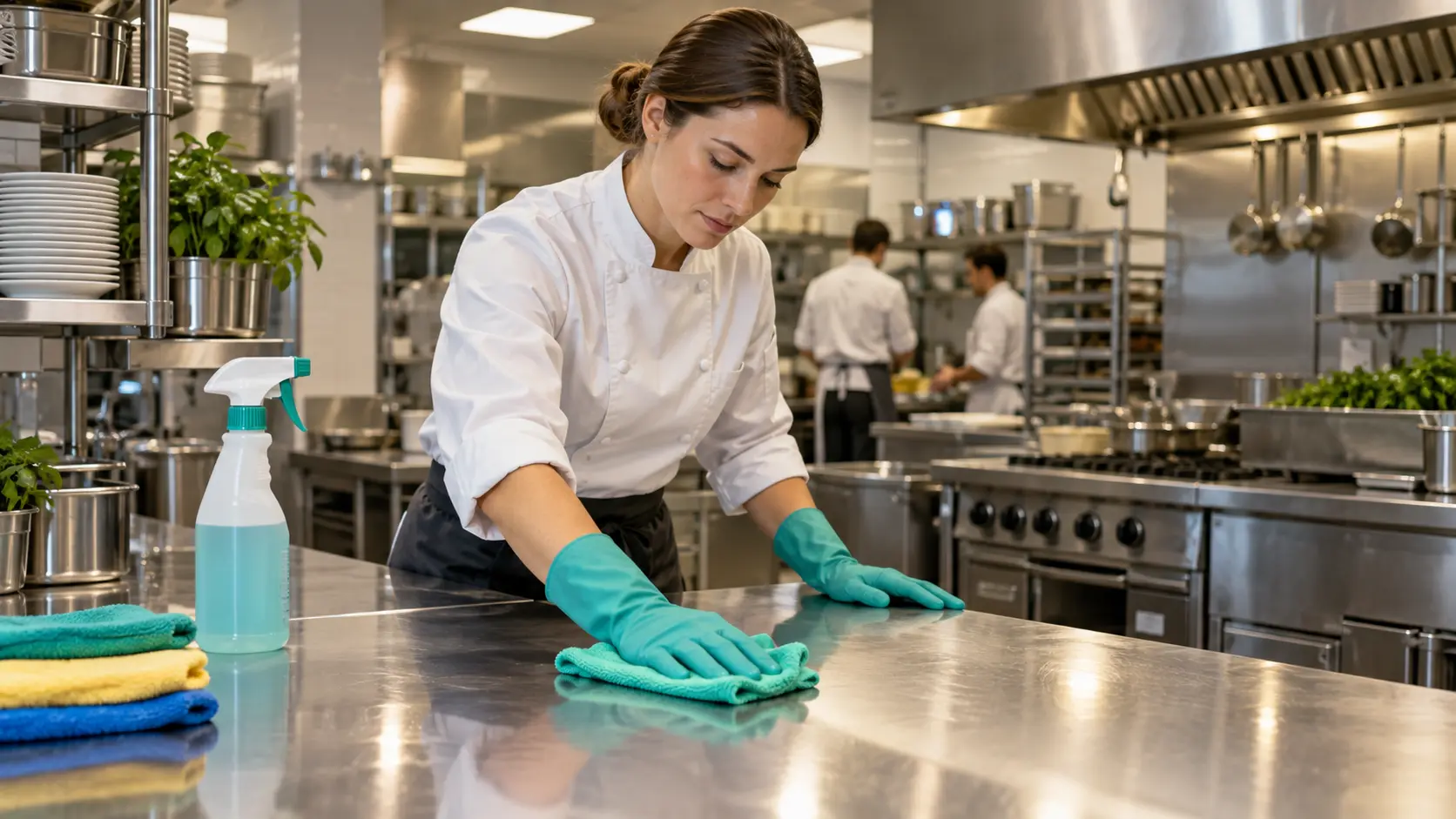
Every restaurant has a cleaning checklist. Most have a signed-off food safety induction. And most still have the same few problems coming back: the cloth used on the wrong surface, the cold room door left open, raw and cooked food a little too close together.
The checklist is not the issue. The issue is the gap between a box being ticked and a person understanding why the box exists.
Box-ticking breaks under pressure
A checklist tells someone what to do. It works on a quiet Tuesday afternoon. On a busy Saturday, when a step takes extra time and nobody is watching, the only thing that keeps it happening is understanding: “if I skip this, someone could get sick, and it would be my station.”
Staff who only know the steps will cut corners when the pressure is on. Staff who understand the reasons will find a way to keep the important ones. That difference is built in training, not on the checklist.
The reasons are the part that gets lost
Food safety and health and safety training is full of cause and effect: bacteria multiply between certain temperatures, chemicals react when mixed, a wet floor near a fryer is a burn waiting to happen. These are exactly the explanations that get lost when training is delivered in a second language. The steps survive the translation; the reasons often do not.
The World Health Organization built its widely used Five Keys to Safer Food around this idea: a short set of principles explained simply enough that food handlers understand the why, not just the what. Keep clean, separate raw and cooked, cook thoroughly, keep food at safe temperatures, and use safe water and raw materials. Five ideas, each easy to remember once it makes sense.
Three areas where understanding matters most
Cleaning and sanitising. Cleaning removes dirt; sanitising kills what you cannot see. Staff who do not understand the difference wipe a surface, see that it looks clean and move on. Our guide to what to clean daily, weekly and monthly covers the routine; understanding is what makes people follow it.
Chemicals. Mixing the wrong products, or using the right one at the wrong strength, can hurt staff or contaminate food. A label in English is not much help to someone who is unsure of the words on it.
Hazards on the floor. Slips, burns and cuts are the everyday injuries of a restaurant. Most are prevented by habits, such as calling “behind” or wiping a spill at once, and habits only stick when people understand what they prevent.
Training that makes sense first time
If many of your kitchen and cleaning staff think in isiZulu, training them in isiZulu is the most direct way to close the gap between ticking and understanding. HospiTrain’s Cleaning SOPs, Equipment Management and Food Safety course and its Occupational Health and Safety course are both available in isiZulu, at the same price as the English versions. Key points are voiced in isiZulu, which helps staff who are less confident readers.
Both courses run on a phone and end with a short assessment, so you can see who has understood the material rather than just who attended. You can find all eight courses on the isiZulu training page, or take both of these as part of the Restaurant Staff Excellence bundle.
Try this on your next shift
Choose one item on your cleaning checklist. Ask the person responsible for it why it is there, in whichever language they prefer. If they can tell you the reason, the training worked. If they can only tell you the step, that is the course to give them next.
References
World Health Organization: Five keys to safer food manual. https://www.who.int/publications/i/item/9789241594639